Opportunity Costs in Business: What Every Decision Really Costs
Economics Economics, Grand Canyon University, Management, Master's in Business Administration, MBATable of Contents
ToggleIntroduction: The Hidden Price of Every Choice
Every business decision has a hidden price tag—the value of the next-best alternative you didn’t choose. This blog explores four real-life examples—from luxury credit cards to the 2008 financial crisis—showing how opportunity costs in business affect everything from marketing to operations.
What Are Opportunity Costs (and Why They Matter)?
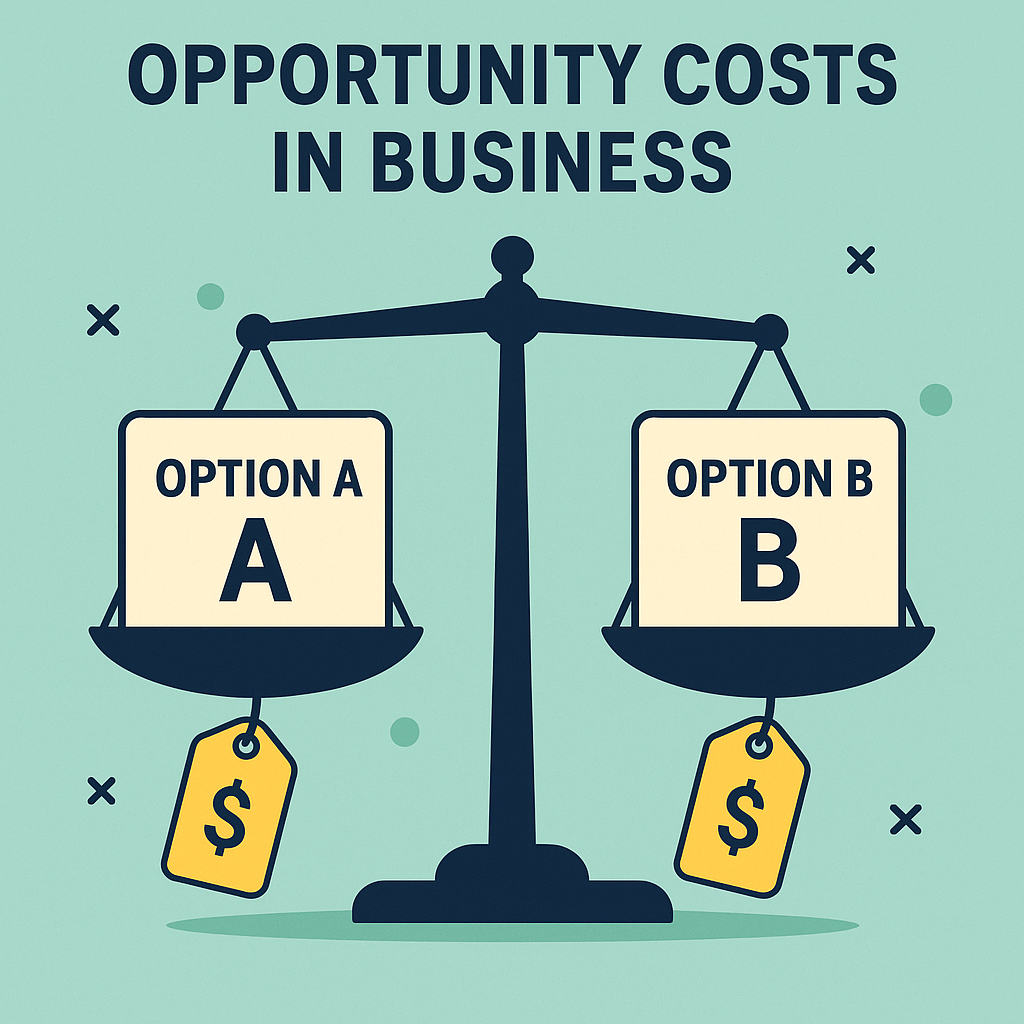
Opportunity cost is what you give up when choosing one option over another.
This simple concept can be the difference between smart strategy and wasted money.
Examples:
Personal: When you get married, you’re giving up all other romantic relationships.
Business: When choosing one marketing campaign over others, you miss out on what the other strategies might have delivered.
Opportunity costs in business help leaders avoid tunnel vision by thinking about alternatives forgone.
“What you don’t choose matters just as much as what you do.”
Market Behavior: Credit Card Prices and Consumer Reactions
In a Wall Street Journal article, JPMorgan Chase raised the Sapphire Reserve annual fee from $550 to $795. That’s a 45% jump.
The Twist?
Consumers didn’t flinch at “45%”—but they panicked when they saw $795.
“Assumed he had been paying less than $100 a year” — Quartz
What Happened Economically?
Demand Shifted Left: Some users dropped the card.
Supply Remained Constant: The company didn’t change offerings.
New Market Equilibrium: Lower demand at a higher price point.
Irrelevant Costs and the Lehman Brothers Collapse
In the 2000s, Lehman Brothers issued home loans without verifying income.
They focused on:
Volume of approvals
Short-term revenue
They ignored:
Relevant costs like default risk
Borrower ability to repay
Result: The 2008 Financial Crisis
What could’ve been done?
✅ Screen borrowers
✅ Account for risk
✅ Consider long-term sustainability
“Good finance is about knowing what costs matter—and which don’t.”
Why Restaurants Stay Open Even When Empty
Owning a restaurant is tough. Why stay open during dead hours?
The Logic:
Staff don’t want broken schedules
Prep work must happen regardless
Some customers do trickle in
As long as marginal revenue > marginal cost, it’s a win
Long-Term Decision:
You might shorten hours eventually, but staying open helps spread fixed costs and boost morale.