Apple Branding and Management Analysis: A Masterclass in Prestige, Profit & Precision
Strategy Branding, Finance, Leadership, Management, Marketing, Master's in Business Administration, MBAIn the world of corporate elegance and strategic power, Apple Inc. stands as a rare beacon: a company that not only makes technology but also defines desire, status and operational mastery. This apple branding and management analysis examines how Apple weaves its brand story, executes marketing with precision, drives financial performance, and manages operations at a level of near-old-money sophistication.
Table of Contents
ToggleBranding: The Luxe of Technology
Apple’s brand is less about gadgets and more about prestige. The bitten-apple icon is as recognizable as a high-end watch crest or bespoke tailoring label. In this analysis we consider:
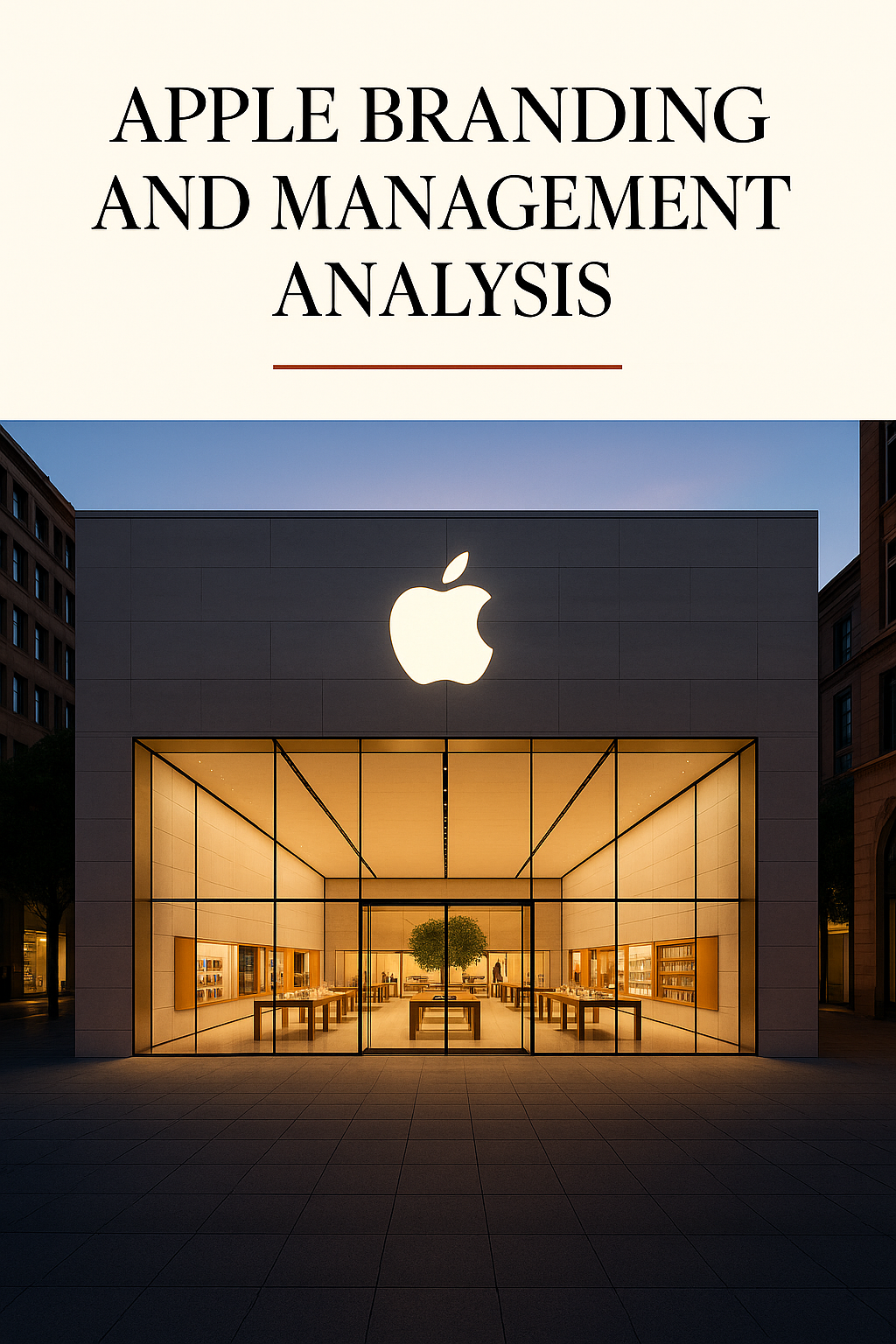
Heritage & Identity: Since its founding, Apple has signalled innovation with elegance. The clean white-space retail stores, minimalist packaging, and consistent design language all reinforce a luxury ethos.
Emotional Capital: Apple doesn’t just sell iPhones—it sells belonging to a lifestyle of refinement. That emotional charge allows premium pricing and high loyalty.
Brand Extensions & Consistency: From iPhone to MacBook to Services to the emerging AI/“Apple Intelligence” ecosystem, Apple expands its brand while preserving the core cues of craftsmanship, exclusivity and integrated experience.
Global Prestige with Local Context: Apple cultivates an image of global sophistication while adjusting regional cues (retail architecture, service offerings) to ensure local relevance without diluting the core brand feel.
Through this lens the “brand” is an asset—perhaps the deepest asset Apple has. The company’s ability to charge premium pricing and maintain high margins is a direct consequence of this branding strategy.
Marketing Strategy: Precision with Elegance
Marketing for Apple is more of a curated art than broad-minded advertising splash. The marketing pillar in our apple branding and management analysis covers:
Selective Messaging & Premium Positioning: Apple keeps the focus on product experience, design, ecosystem and status—rather than price wars or aggressive discounting.
Launch Rituals as Ceremony: Every major product unveiling (for example, the recent iPhone 17 lineup) becomes an event. This ritual elevates demand and shapes perception of innovation and exclusivity.
Ecosystem Marketing & Cross-Sell: Marketing emphasises how devices, software, and services work seamlessly together. Once a customer enters the ecosystem, retention and upsell are smoother.
Global Campaigns with Local Adaptation: While the brand voice remains consistent globally, Apple adapts marketing to different geographies—important as regions like Greater China become increasingly vital.
Services & Subscription Growth: Marketing is shifting from one-off device sales to recurring revenue models (services, accessories, wearables). This transition complements the brand’s premium image with the promise of continuity and ownership of the experience.
Marketing thus reinforces the branding strategy and supports business expansion into new revenue streams.
Financial Performance: Premium Returns, Strategic Growth
In this apple branding and management analysis, Apple’s financials reflect the successful marriage of brand power and operational discipline. Key financial highlights for fiscal 2025:
Full-year revenue reached approximately US$416 billion, an increase of about 6.4 % year-over-year.
In Q4 (ended September 27, 2025), revenue was US$102.5 billion, a record quarter.
Services revenue surpassed US$100 billion for the first time and grew by high-teens in the quarter.
Gross margin improved to approx. 47.2 % in Q4, reflecting favourable product mix and premium pricing.
Net income and EPS increased double-digits—reinforcing financial strength alongside brand prestige.
These numbers underscore how Apple’s branding and operational strategy translate into tangible financial advantage. The high margin, recurring services growth, and premium device leadership all tie back into the brand narrative and operational rigor.
Operational Management: Precision, Scale & Discipline
In this analysis we now turn to the operational backbone that supports Apple’s branding and marketing excellence.
Supply-Chain Mastery & Manufacturing Discipline: Apple manages an extremely complex global supply chain while maintaining premium quality standards. In 2025 it committed investments—over US$600 billion over four years—in U.S.–based advanced manufacturing, silicon engineering and AI infrastructure.
Product Launch Cadence & Engineering Pipeline: Apple’s disciplined approach to design, development and release schedule (e.g., new chips, updated iPhones, integrated software) enables sustained brand momentum.
Retail & Services Infrastructure: Apple maintains control over retail environment, service experience and ecosystem integration—supporting premium customer experience globally.
Global Expansion with Local Sensitivity: While headquartered in the U.S., Apple manages operations in dozens of countries, navigating tariffs, regulatory regimes, and regional supply-chain risk. For example, in Q4 Apple absorbed tariff-related costs around US$1.1 billion but still grew revenue.
R&D & Innovation Investment: With rising R&D spending and focus on areas such as AI (via Apple Intelligence), Apple ensures operational readiness for the next wave of innovation while protecting its premium position.
Operational management is the silent partner to branding and marketing. Without scale, reliability and innovation, the premium positioning would falter; and Apple ensures all three are in place.
Integrated Strategic Insights
Combining the four lenses—branding, marketing, finance, operations—here are strategic observations from the apple branding and management analysis:
Brand → Finance Link: The strength of Apple’s brand gives pricing power and margin resilience, translating directly into financial strength.
Marketing → Operations Synergy: Marketing positions premium experience; operations deliver it. The seamless device-service ecosystem is both the promise and the delivery.
Financial Discipline → Sustained Innovation: Healthy returns fund heavy R&D and capital investment, enabling Apple to maintain leadership rather than simply riding past momentum.
Operational Excellence → Global Resilience: By managing a complex global value chain and absorbing tariff/regulatory shocks, Apple reduces vulnerability despite its lofty pricing and high expectations.
Future-Facing Positioning: Apple’s investments in AI, advanced silicon and services suggest the brand is preparing for another horizon—not just upgrading hardware but transforming experience—and that positions it for sustained premium leadership.
Risks & Considerations
Even a company as strong as Apple carries risk. Our analysis highlights:
Innovation Expectations: With brand prestige comes expectation for breakthrough products (e.g., mixed-reality, AI). If innovation lags, premium positioning may erode.
Premium Market Vulnerability: Economic downturns or aggressive competition could challenge Apple’s ability to sustain pricing or upgrade cycles.
Geopolitical & Supply-Chain Risks: Tariffs, trade tensions (especially with China), and regional disruptions remain operational risks despite mitigation.
Ecosystem Lock-in vs. Openness: As Apple grows services revenue, it must balance premium experience with regulatory scrutiny regarding platform dominance.
Brand-Dilution Risk: As Apple expands into more services and lower-tier offerings (or into new product categories), it must preserve the luxury feel and avoid commoditisation.
Conclusion
In a landscape crowded with tech companies, Apple stands apart—not just because of innovation—but because of a rare combination: elevated brand image, strategic marketing, brute-force financial discipline and operational excellence. Our apple branding and management analysis shows that Apple isn’t merely a gadget maker—it is a luxury class brand in the digital age, and its management design ensures it stays there. For brands, marketers, and executives alike, Apple serves as a masterclass in how premium perception, repeatable systems, and strategic capital investments together forge enduring dominance.
For anyone looking to benchmark a brand that behaves like old-money—quiet, refined, value-driven—Apple is perhaps the finest example in modern corporate life.